In the summer schools of the Elementary Science Study in Cambridge, MA adults partnered with children and helped SHADOWS come alive. This was the early 1960’s and no one was battling Coronavirus. But like now, they were interested in using the immediate world as the obvious subject for science and for learning. What could be easier and more fun than light and shadows?
Things are complicated right now. We are trying to reopen schools under very dangerous conditions. Some families are electing to remain at home until local health science indicates that group learning in a school building is safe. Light and Shadows is just one example of very simple investigations that everyone can do in the neighborhood, free of charge.
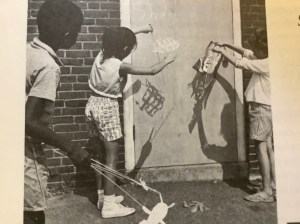
Lacy things, things with holes. What kind of shadows do various objects make? What about square things and round things?
Drawing around one’s shadow isn’t simple. Often first tries are wobbly ones but keep trying and invention grows.
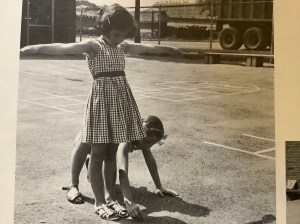
Choose a pebble on the ground. Can you circle it with the shadow of your own hand?
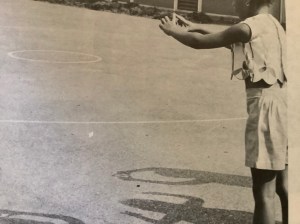
What’s going on here is harder than it looks. Knowledge of space is being challenged and created and expanded.
What about Shadow Games? Simple Simon Says: Stand with your shadow in front of you. Touch your shadow. Foot stomp your own shadow’s head. Hide your shadow. Don’t touch your shadow at all.
Shadow Touching!
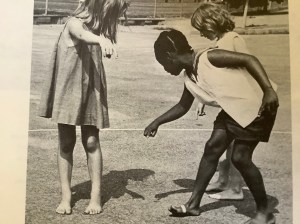
Try making each other’s shadows touch fingers, shake hands, touch toes, bump heads, fists or elbows.
How about Shadow Puppets or Shadow Silhouettes?
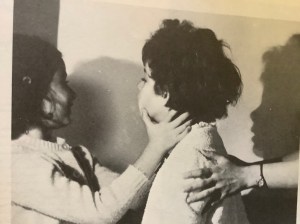
Making a silhouette is just a little harder than you would expect. How do you get someone’s head into a good shadow position? One solution is to have two children look at each other, while a third person does the drawing.
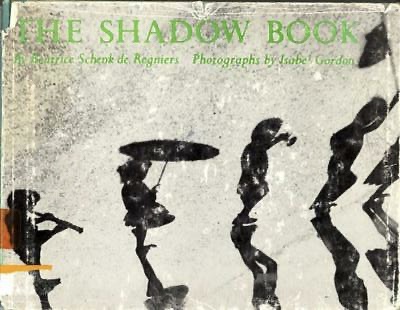
The Shadow Book by Beatrice S. de Regniers and Isabel Gordon, NY Harcourt 1960.
LIGHT and SHADOWS: Space Relationships Through The Phenomena Of Shadows. McGraw Hill, 1976.
Philip and Phylis Morrison were a big part of that first Shadow Study Summer.
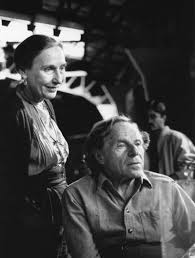
 kathyirwin1