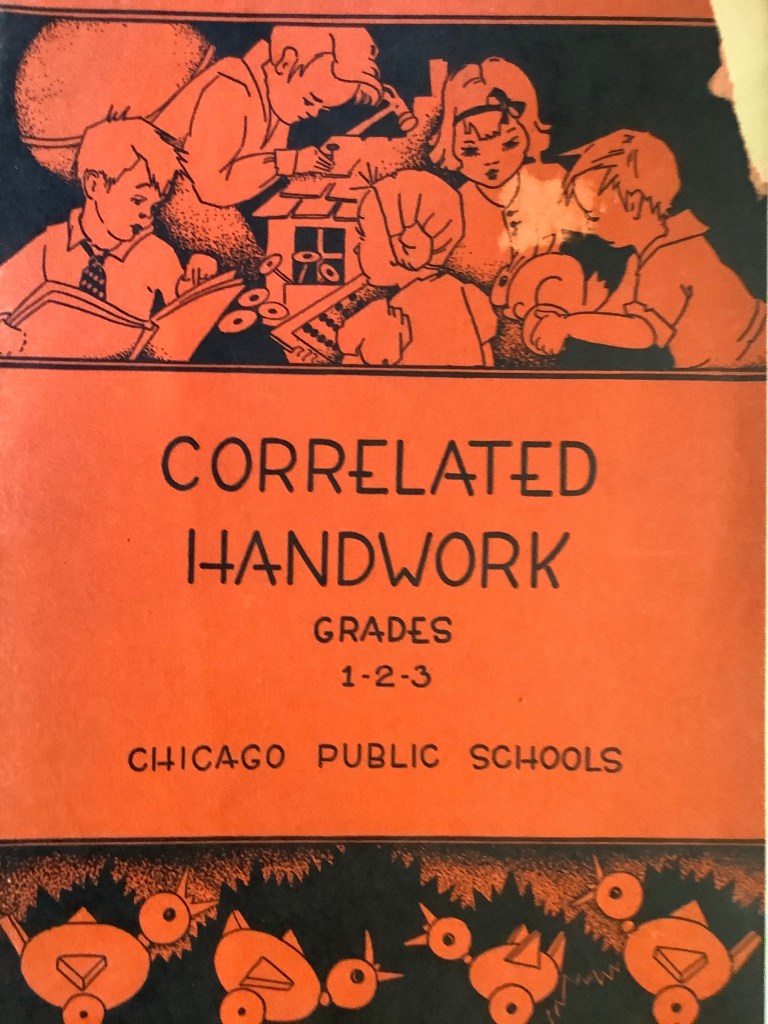
In August of 1935 this is a wise & wonderful statement The Chicago Board of Education sent out to the city’s school community. “Modern teachers know that children learn thoroughly ONLY when they have had the opportunity to take an ACTIVE part in LIFE-LIKE experiences. They do not deal effectively with matters in which they have little interest nor do they benefit much by the acceptance of materials prepared for them by the teachers. They learn slowly and UNWILLINGLY when instruction uses empty words and neglects their meanings and significance.”
Instead of remaining tangled up in Modern EdSpeak and Techno Jargon, we might look back 85 years for a little inspiration.
Here is what was suggested for FIRST GRADE. This could be done in the most impoverished of homes and there were plenty of those in Chicago back in 1935. It was called The Great Depression. Anyway, no one allowed their imaginations to be policed by the Google Classroom Cops back in the day. Instead they did this!
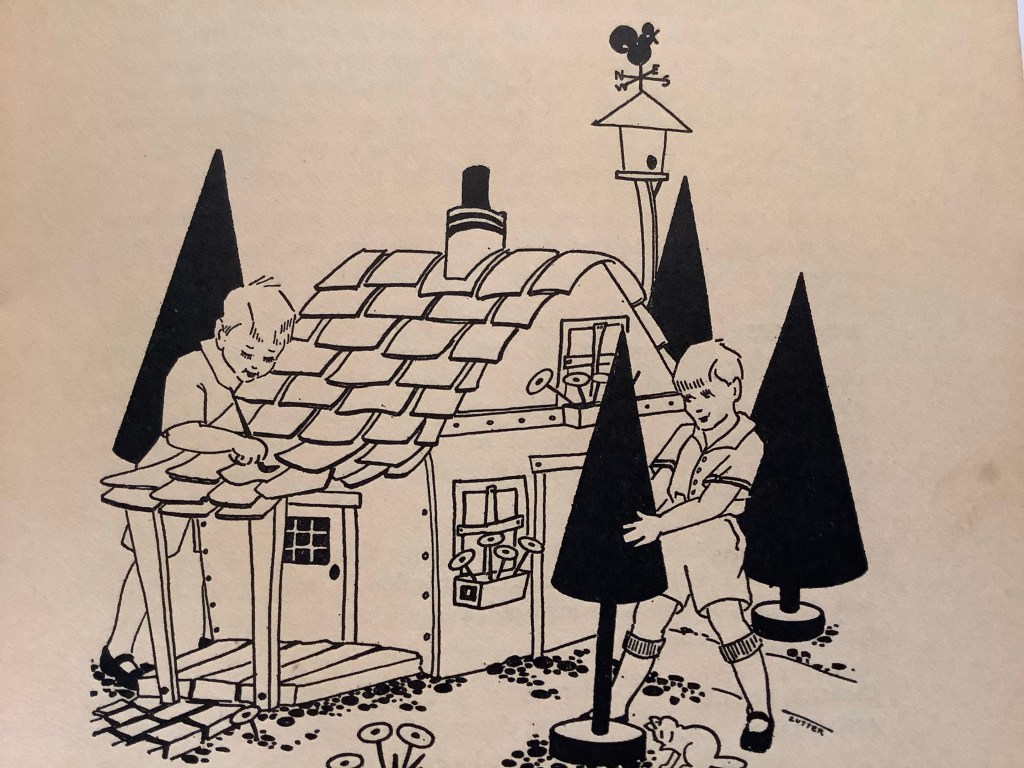
CONSTRUCT A HOUSE. Decorate it, make furniture, weave rugs,make curtains, model dishes and utensils. Every step in this project will make use of their pre-school experiences. The child must first plan and decide on such questions as these: Where shall the house be placed? How many room shall it have? What shall the rooms be called? Why is a kitchen, dining room, bedroom or living room needed? What furniture will be needed? What materials will be used to construct the house? How shall the house be decorated?
The scrapbook should have pictures, drawn or photographed, showing things that are used in a home. An electric iron, a sewing machine, tools, garden implements, model fruits and vegetables, a health clock showing a day’s schedule for a healthy child.
TOOLS AND MATERIALS: The house should be constructed with tools and materials which can be manipulated by first grade children. This would include brown wrapping paper, orange crate wood, heavy twine, leather/fabric scraps, paste and glue, ruler/yardstick, tack hammer and a paint brush. Windows can be covered with cellophane or plastic wrap glued on. Dishes can be fashioned from clay or play dough.
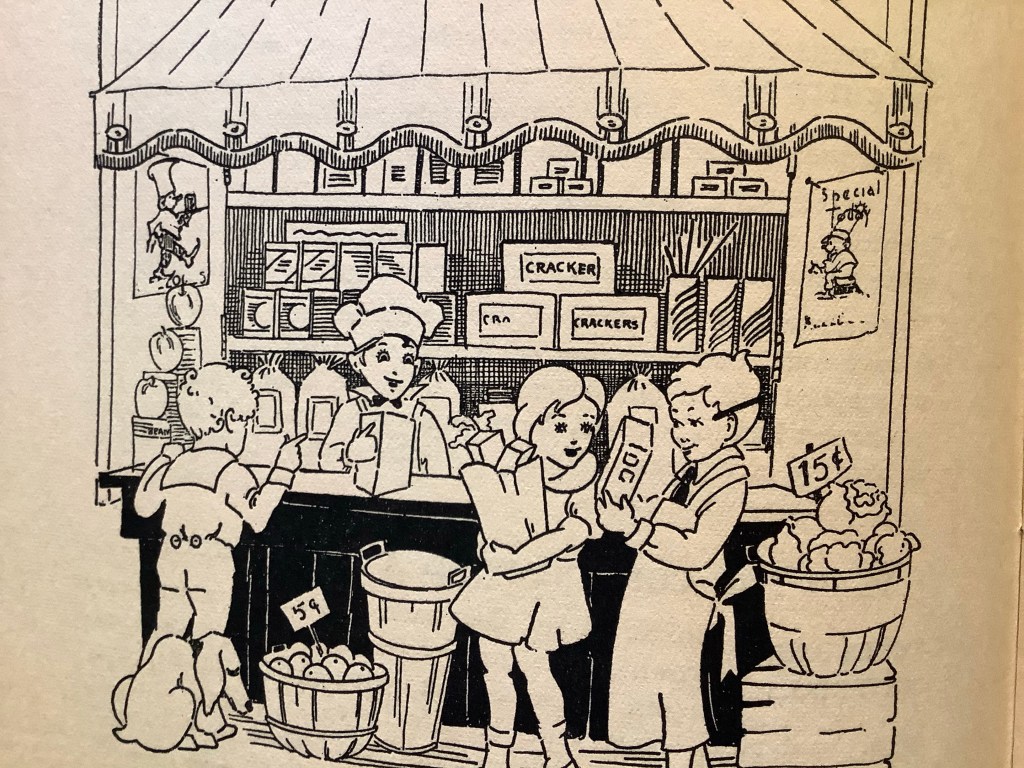
This work explodes into a series of projects that move out into an imagined neighborhood. Children construct a Grocery Store with all the necessaries like shelves, refrigerator, delivery van and signage.
“THE GROWTH OF THE WHOLE CHILD: A correlated program provides for the more complete development of a child. She learns to get along with others as she works and plays on her house or store. She learns to persevere in spite of failure and to carry her work to a successful finish. She learns that one individual is dependent on others when completing a big project. She gains control over the materials and tools of learning and she develops many desirable traits of character.”
 kathyirwin1