Scott’s Run was a long valley of coal seams crowded with camp after camp. As Elsie Ripley Clapp/ERC drove along she saw abandoned tipples, burning slag heaps, no trees, no gardens. Steep hillsides made barren, coal black, ugly and dangerous with flimsy, dilapidated shacks.
Some were crowded along a highway but others much worse, were perched high on hillsides. unkempt, leaning, empty storefronts, broken glass fronts, rickety porches. There were worn-out advertisements, dirty under-stocked stores, trash for as far as the eye could see.
And then there were the men. Listless, smutty-faced with their raggedy sweet-faced children and maimed curs. One single camp was built on a cinder heap. Not a tree. Families living in long shacks. Just one room or two with a foul privy behind. What passed for a school was 40 children in a room, sitting in desks from 9-4. All of it resting precariously on a hillside high above.
There was Nadia Danilevsky talking to men who were laying pipes for what might become a public water system. At long last, they were going to have running water and certainly that would help. But no amount of water could wash away the utter, awful ugliness, nor the listless/hopeless atmosphere.
This place was a rotting shell leftover from the Boom Days. It was the epitome of abyss and abandon. And one could not help feeling outraged that human beings would be obliged to exist under such miserable circumstances. This description became the POINT of the Community School.
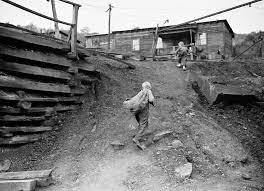
The Community School that E.R. Clapp went on to create was what we might today call an activist school. It was a public school that took action.
Robb Elementary in Uvalde, Texas is of a similar mind and history. Clapp and her cohorts had the tragic residue of industrial/police state greed and corruption to deal with. Uvalde was afflicted with the pernicious legacy of colonizing capitalism fueled and excused by rampant racism. Robb sits in the middle of its Hispanic community.
Its families have fought tooth and nail since the late 1960’s for a safe facility, books, buses, nutritious school meals, Spanish-speaking faculty. The basics.
Genoveva Morales, mother of 11, filed the first lawsuit in 1970 that resulted in a Court integration order. That came after a massive, multiple school walkout. Six weeks of protests, pickets, armed Texas Rangers patrolling the Hispanic streets of Uvalde, Huey helicopters flying overhead and taking recon photos of marchers. The Community School responded with packed, contentious school board meetings, a Freedom School, a Free Lunch program, a newsletter, a Teatro/Theater company and much more.
In 1980 The US Department of Justice sued Uvalde schools. It charged them with racial discrimination and the persistence of policies that diluted the voting power of neighborhood Hispanics. At-large school board elections had been engineered to ensure that no Mexican Americans won.
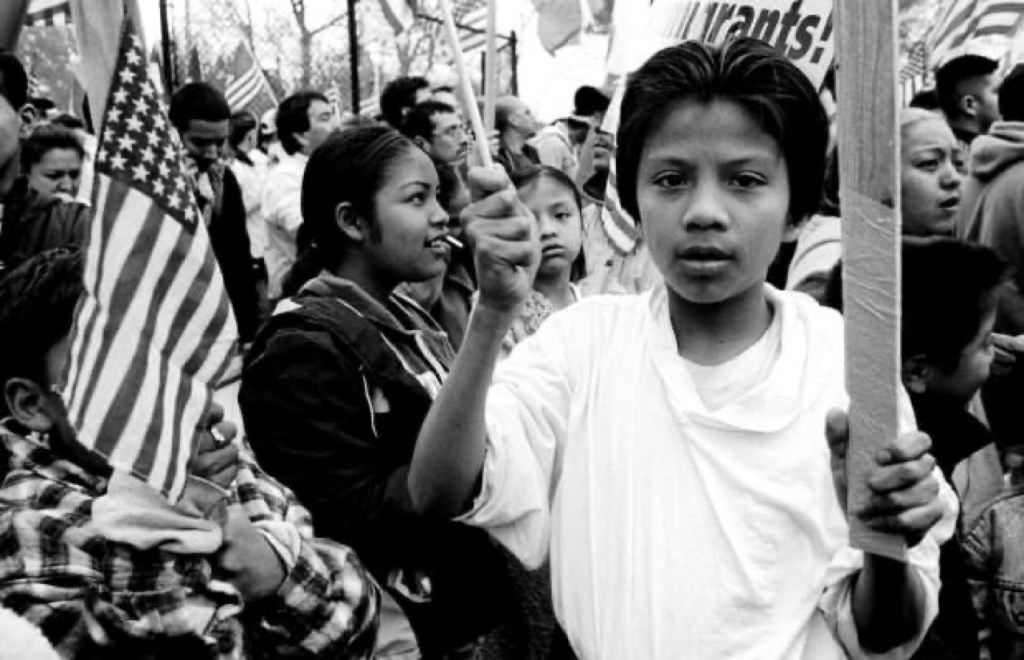
If you want to STOP a Community School dead in its tracks, make sure no one from the community can get elected to governance, oversight, policy/finance/curriculum decisions or review of the parent complaints that pile up after decades of abuse and neglect and exploitation.
 kathyirwin1