Archives for the month of: August, 2023

It is possible to make a pretty good weighing device, in the form of a balance, using a couple of soda straws, a few pins and a moderate amount of ingenuity. Jerold Zacharais liked to say that he could weigh a fly’s wing with such a device, and he probably could have.

Any student who struggled to achieve it would almost certainly emerge with a new respect for the meaning of measurement. The appreciation was the real point of PSSC. Not accuracy for its own sake but rather for the understanding that it made possible. It was designed to provide a sense of the playfulness that often characterizes good science and with the delight of discovery.

There were many other features of PSSC that were attractive to scientists. Improvising inexpensive and ingenious equipment such as the soda straw microbalance or thinking through how to make atoms and molecules real and believable, filming complicated but interesting physical phenomena. All of it had enormous appeal.

The film called A Million To One deserves description because it conveys so well the light-hearted spirit that came to exist in the studio. The PSSC equipment group had improved upon an invention called a dry-ice puck. It was a simple disk that could float almost without friction on a thin layer of gaseous carbon dioxide. Using the same principle as the British Hovercraft which rides on a cushion of air. The carbon dioxide is obtained from an evaporating piece of dry ice carried in a container attached to the puck. The whole structure weighs perhaps 2 kilograms. But friction is reduced to such a low level that the puck can be set skimming across a smooth surface by a very small force.

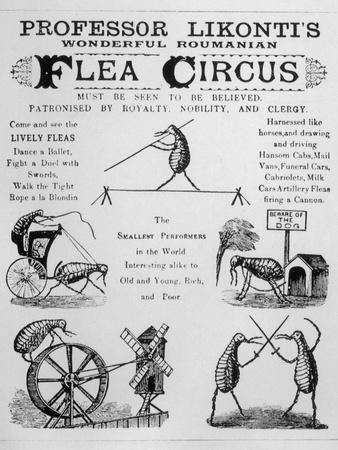
“Zach was so impressed by these dry-ice pucks that he kept saying, ‘I’d like to see a cockroach pulling one of these pucks.’ Unknown to him, the film crew went down to New York City and found a flea circus on 42nd Street run by a Professor So-and-So. They made a deal with this guy and they made a three or four minute film strip. The guy actually harnessed a flea to one of these five pound pucks. And they had the movie where the flea actually pulls this damn thing. It was really marvelous.”

A Different Sort Of Time: The Life Of Jerrold R. Zacharias/Scientist, Engineer, Educator. By Jack S. Goldstein/MIT 1992.

Kano Northern Nigeria 1965

I somehow managed to cram myself into the narrow space at the back of an African 5th Grade classroom. Scientists, educators and administrators had traveled from America, England and other parts of Africa. We had come to Kano to attend a remarkable conference on African Science Education organized by Jerrold Zacharias.

Zacharias had arranged for us to come to this school to witness a local African teacher, who after only 2 weeks of training, was going to teach science not by TELLING students about it but by putting the simple materials of science, in this case flashlight bulbs & batteries, into their hands. Letting the children manipulate them and make their own experiments. Boxes of scraps containing bits of wire, paper, string, wood, paper clips and rubber bands. The teacher simply asking, “Can you light the bulb?’

Self-consciousness and uncertainty evaporated quickly. One by one, flashlight bulbs lit up. First in one part of the room and then another. Illuminating briefly each time the intense absorption and delight in the children’s faces. Each of us watching had felt that same sense of wondering delight as young children in rare and lucky moments of discovery. We were thrilled to recognize it again now. The teacher moved quietly among the groups of students. Offering encouragement here. Asking provocative questions there. “Can you make the bulb give a brighter light? Can you light 2 bulbs? Will string work in place of the wire?”

60 of us had gathered in Kano. Many of us professional physicists, chemists, biologists and physicians. We had little prior experience with children’s science or with Africa. Yet here we were. Filled with a contagious enthusiasm. Ready to learn. Ready to go forward. I did not understand by what magic Zacharias had persuaded hard-headed scientists that we might be useful in such an adventure. But he did and we were willing.

The Cold War influenced Zacharias strongly. Reinforcing his unembarrassed love for Democracy, Decency and Fair Play. He felt a scientist’s abhorrence of dogmatism. Especially the forms of it that he encountered. McCarthism, Communism, Know-Nothingism and Radicalism of any sort. He came to believe that Education was the most effective way to address the ills of the world. “In order to save Democracy, we’ve got to educate the people who vote. There’s no question in my mind about that.”

A Different Sort of Time/The Life of Jerrold R. Zacharias/Scientist, Engineer, Educator. By Jack S. Goldstein/MIT 1992