Mable Hillery was a singer of Georgia Sea Islands children games, dances, plays, fantasy songs, blues & spirituals. She was known by school teachers for developing teaching manuals and audio tapes that preserved traditional folk songs from The Georgia Sea Islands.
Mable worked with Interdependent Learning Model’s Follow Through Program housed at 144 West 144th Street. It was a part of the Graduate School and University Center of the City University of New York. This program developed materials for classroom teachers seeking to preserve & highlight Black culture.
Ms Hillery worked on cultural projects in Harlem. Specifically at Public School 76 located at 220 West 121st Street. She also worked with six schools in Atlanta. And eventually instructed at Bank Street School Seminars. She was especially devoted to recitals of “play songs” for Black children.
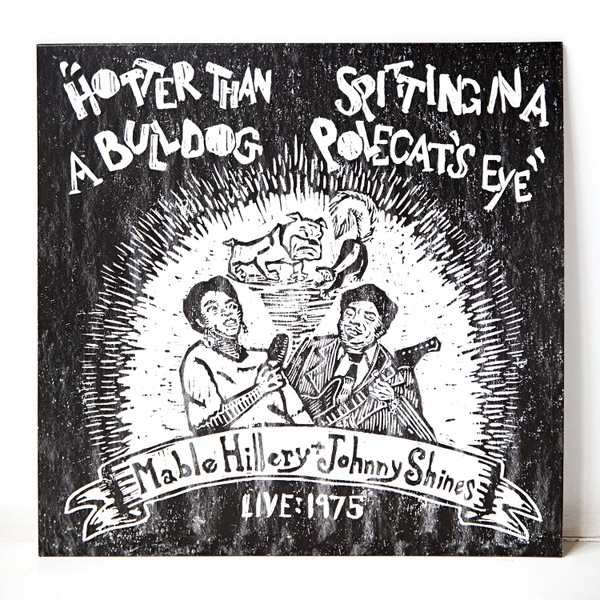
Her workshops often combined children, youth and adults. They were definitely not sit down affairs or staged events. Participants could choose just to observe, but everybody was involved one way or another.
From Mabel we learned never to judge a book by its cover. Someone might be sitting on the sidelines out of shyness. But if you studied their face, you saw the interest, the concentration and the absorption.
A favorite play song routine was titled Little Johnny Brown. It was lots of fun and very humiliating for all of us who joined in. It went like this.
“Little Johnny Brown. You spread your comfort down. Little Johnny Brown spread your comfort down. Fold one corner Johnny Brown. Now fold another corner Johnny Brown. Fold another corner Johnny Brown. Yes fold another corner Johnny Brown. Now take it to your lover Johnny Brown. Take it to your lover Johnny Brown. Show her your emotions Johnny Brown. Show her your emotions Johnny Brown. Now lope like a buzzard Johnny Brown. Lope like a buzzard Johnny Brown. Give it to your lover Johnny Brown. Give it to your lover Johnny Brown.”
The humiliating parts were the required actions. The dance began with a big circle. One person was chosen to play the leader role of Johnny Brown. That person was given a piece of fabric to symbolize a comforter or a quilt. And when the big group sang “Little Johnny Brown spread your comfort down.” The leader placed the quilt on the floor in the middle of the circle and began artfully or humorously dancing to each corner folding them one by one. Taking it to Your Lover involved some completely silly, improvised movement. And Lope Like A Buzzard had you flapping your wings and imitating any type of chicken dance you could manage.
Absolutely hilarious and a terrific group builder as well. Everyone laughed. Everyone enjoyed the antics of the Leader. Inhibitions began to melt away. And often as not, friendships were formed. This was the genius of Mable Hillery. She was a Community Organizer Georgia Sea Islands Style.
Mable Hillery never-ever forced participation on anyone. Water was allowed to seek its own level, so to speak. Reticence was respected and protected. She told us quite explicitly not to try and remember the words to the songs “perfectly.” We were humans. We were artists. We were teachers and students all rolled into one. And we kept the traditions ALIVE by adding our own pizzazz to the mix. We also used our own voices. No recorded music. No instruments. No technology of any kind. These were street games, stomps, songs, hand-claps and chants. We performed them and enacted them as if we were on a neighborhood corner, a playground, an open field or a coastal Sea Barrier Island Sandy Beach.

Another favorite was “Chicken And A Chicken And A Crowd Of Crows.” This one was a hand-clap which could get as complicated as your eye-hand coordination permitted. Or could remain as basic as a simple patty cake clap.
But the words told the story of a witchy woman who liked to steal chickens. It goes like this. “Chicken and a chicken and a crowd of crows. I went to the well to wash my toes. But when I got back, my chicken was gone. What time was it Old Witch? It was a 1 o’clock. Say 1 o’clock.” Everything gets repeated taking us from 1 o’clock straight up to 5 o’clock. And each time a number is shouted we paused, threw one hand up into the air and waved it, along with our hips, turning about as if we were the stars of a full-on Hokey-Pokey production.
This song held the flavor of a mysterious island childhood. Where a community well became the focal point for all manner of public rituals. Washing dusty feet or cleaning a freshly butchered chicken only to lose it to a thieving, creepy crone. Exciting stuff!
Just so we are CLEAR! This is The Georgia Sea Islands Brunswick Georgia History that Mable Hillery married into.
“On February 21, 1891, almost exactly 129 years before white vigilantes fatally shot Ahmaud Arbery in Brunswick, Georgia. A mob of white men lynched two Black Men named Wesley Lewis and Henry Jackson. Just outside of Brunswick. Without trial or investigation they were hanged from a tree, riddled with more than 1,000 bullets & then left on display for thousands of white spectators to view. As one newspaper described the scene:
…the population of Brunswick turned out en masse to visit the scene of the lynching. Vehicles were at a premium and it is estimated that more than 3,000 people made the trip to Dent Swamp during the morning. A few hundred yards away from the improvised gallows a country church was in full blast, and the singing of hymns almost within sight of the dead negroes.”
Mable’s work was always a powerful tribute to these very people and the trauma they had endured for generations. Buried in the belly of the Plantation System brutality emerged a deep, intelligent, delightful, creative & subversive repertoire of music, myth and mischief. This was the treasure teachers were given.
The universality of these songs and games is both stunning and reassuring. 30+ years of sharing them with people of all ages and incomes confirms their enduring appeal. They sound REAL. They feel like stories that happened to someone & somewhere familiar. They are so authentic that they stick in your throat and in your muscle memory. Therefore, they are easy to remember and reproduce vocally and motorically.
Folklorist & Ethnomusicologist Alan Lomax thought so highly of Mable’s work that he wrote this to The Ford Foundation.
April 7, 1969. “Mable Hillery, and the Reverend Frederick Douglass Kirkpatrick have had great success in improving the atmosphere and the educational exchange in Harlem School PS 76, at 220 W. 121st Street. They did it by bringing to the kids the complex and culturally rich folk songs and dances of the Southern United States. A pilot experiment is ready to be set up involving Mable Hillery and Reverend Kirkpatrick and the Sea Island Singers in the New York City school system.

Last year these two Black friends of mine, Mable Hillery & Reverend F.D. Kirkpatrick, who are ‘natural educators’ and also great singers of folk songs, worked in one of the most disturbed schools in the NYC metropolitan area.
They brought peace and a renewal of educational activity into situations which had formerly been totally chaotic. Where school administrators and teachers were out of contact with their pupils. This art is itself a communication about the Black cultural tradition which has been mistakenly omitted from our educational curricula. The most talented Black folk should be brought into the schools to give the children a formal education in the Afro-American musical tradition. Teaching the children the songs and dances of their ancestors. Is how the lessons of history, social science and literature can be given a richer meaning. By bringing in people from the community, the schools will be establishing natural ties to the entire Black community.”
And Here Is What Can Be Found Today At The Library Of Congress.
Personal name
Main title
- The guide to the use of street/folk/musical games in the classroom : Volume 1, Song-games / Mable A. Hillery, Patricia M. Simmons.
Published/Created
- New York : Interdependent Learning Model, Graduate School and University Center of the City University of New York c1974 : Interdependent Learning Model, Fordham University, c1979.
- This teaching guide is the first of three volumes designed to teach Afro-American children street/folk/musical games in the elementary classroom. It is one of the Interdependent Learning Models (ILM) whose overall objective is for teachers to use the cultures of their students as vehicles for teaching academic skills and content. This volume focuses on ten traditional folk and clapping and chanting games. An introduction offers an historical overview of games, the definition of folk and street games, and a rationale for using games in the classroom which explains the effects on learning, attention, self-concept, and physical development, as well as benefits for teachers and schools. The second chapter defines the games as Transactional Instructional Games (TIGs), lists distinguishing features of TIGs, suggests teaching methods, and offers an implementation checklist. The ten games follow: Frog in the Bucket, Stick Out, Bobbing Needle, See Aunt Dinah, Emma You My Darling, Chicken and a Chicken, Skip to the Barbershop, Johnny Cuckoo, Little Jonny Brown, and Riley. For each game background information, lyrics, directions for action/movements, and learning objectives relating to academic, physical, and social skills are presented. Line drawings illustrate the actions when necessary. All games are for groups, stress singing and clapping in rhythm, and are non-competitive. A tape cassette, available from ILM, records a group of children with a teacher singing and clapping the songs.
- The 2nd teaching guide is Volume 2 designed to teach Afro-American children street/folk/musical games in the elementary classroom. It is one of the Interdependent Learning Models (ILM) whose overall objective is for teachers to use the cultures of their students as vehicles for teaching academic skills and content. This volume focuses on clapping and chanting games. The first section of the guide offers suggestions for teaching the chants, including the need to examine the chants before teaching them, how to use chants to motivate and reinforce learning, and describes six ways to collect chants. Section II presents a teacher’s checklist for using a chant as a teaching tool, including eight points to consider after teaching the chant. Eleven chants follow: Juba, Hambone, Walk Along, Blow Tony, Head and Shoulders, Someone’s on the Phone, Categories, Old Lady from Booster, Who is the Greatest, Who Stole the Cookie, and The World is Big. For each chant background information, lyrics, directions for action/movements, and learning objectives relating to academic, physical, and social skills are presented. Line drawings illustrate the actions when necessary. All chants are for groups, stress singing and clapping in rhythm, and are non-competitive. A tape cassette, available from ILM, records a group of children with a teacher singing and clapping the chants.
 kathyirwin1