What do you think these kids are investigating?
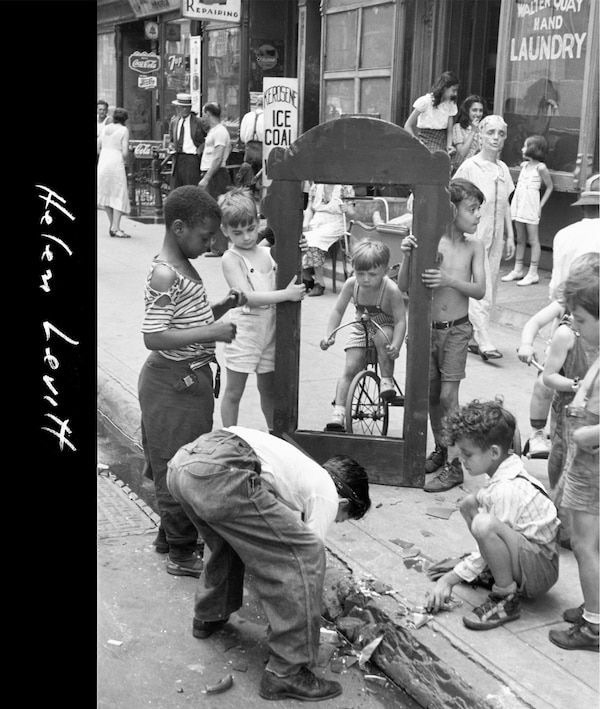
What do you think these kids are investigating?

These children are about to roll a big circular object downhill.
One boy claims the tube will roll faster if he curls up in the center.
Another says that this will cause the tube to roll more slowly.
What do you say?

We were attempting to introduce programs that served ALL children. Not any special group.
Inquiry Science provided the experience with the process of science that could be applied to all subjects.
Science could be used to focus on Thinking Skills. Rather than decontextualized material.
Work was carried out in schools that served the poorest students and those in working class communities.
Mice, gerbils, snails, frogs, guinea pigs, pill bugs, parakeets, fiddler crabs, iguana, Betta fish, Goldfish, rabbits, king snakes, ants, grasshoppers, puppies, kittens.

Effective Science Learning has its roots in curiosity and care-giving. We give a care. The natural world is important to us. We are part of it!
Living creatures are ideal for study in every classroom. What are their names both common & scientific? How do we construct the right habitat? What do they eat? How much do they weigh? Is there a timed biological cycle or response to environmental cues like temperature, light, food or seasonal change? Do they have skin or fur or feathers?
In 1965 Boston’s Ealing Company filmed a series of ecological wildlife films ranging from Alligators to Water Fleas & from Beavers to Moose. The human actors in these films were elementary school children.
They were shown caring for & investigating living creatures. The investigations were behavioral. Meaning not psychological or invasive hurtful. They also were open-ended films showing only the beginning of an investigation since students were being prepared to continue the investigation on their own in their classroom over time.
Each film also included a non-science area. In the Guinea Pig film the children graphed the growth of their animal. In the Frog film children choreographed a dance that mimicked frog movement. In the Snail film the children made wax-resist paintings of snail trails. In the Iguana film they made sculptures of a very well- behaved iguana.
An excellent animal behavior science inquiry book is Anna Botsford Comstock’s The Handbook of Nature Study.
It is now in its 24th edition and is Kindle available on Amazon. Cornell University’s Anna Botsford Comstock wrote and illustrated several books including Ways of the Six-Footed, How to Keep Bees, The Handbook of Nature Study, The Pet Book & Trees at Leisure.
Related References

https://www.popularmechanics.com/space/a40486004/space-bubbles-climate-change/


Blow bubbles so they float down into the clear container. The bubbles will descend and then hover on the denser layer of carbon dioxide gas accumulating above the dry ice.
After a few minutes, notice that the bubbles begin to expand and sink. Notice how some of the bubbles freeze on the dry ice.


Frank Oppenheimer was an experimental physicist. And one of the crucial instruments of his era for visualizing the paths of subatomic particles was the BUBBLE CHAMBER.
Invented by Nobel Laureate Physicist Donald Glaser. This device used a superheated transparent liquid like liquid hydrogen that would boil and form a trail of tiny bubbles along the path of a charged particle passing through it.
These tracks could then be photographed and analyzed to understand the fundamental building blocks of matter.

 kathyirwin1