
Water molecules like to stick to each other.
And scientists call this sticky, elastic tendency “surface tension.
When you blow a bubble, you create a thin film of water molecules sandwiched between two layers of soap molecules.
Water molecules like to stick to each other.
And scientists call this sticky, elastic tendency “surface tension.
When you blow a bubble, you create a thin film of water molecules sandwiched between two layers of soap molecules.
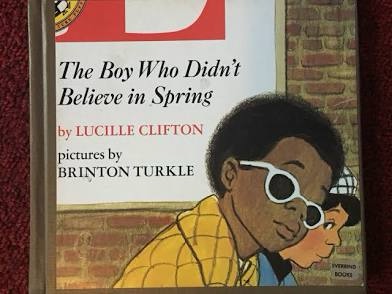
Meet King Shabazz & His Best Friend Tony Polito.
What King really did NOT believe in was Science as an active, inquisitive, investigative adventure. Reduced to a series of Show & Tell Adults proclaiming a seasonal event for which he had no evidence or experience.
“Everybody talking about bout Spring. But WHERE is it at?”
Finally fed up and frustrated with the empty words, he declared, “I’m goin to get me some of this Spring. If Spring really is Just Around The Corner. I’m goin to go round there and see what do I see.”
King and Tony set off on a manhunt across their city neighborhood in search of Spring.
Spring is absolutely nowhere to be found at the school, the playground, Weissman’s Delicious Smelling Fine Bakery, the Church of the Solid Rock, a restaurant, a Texas Bar-B-Q take-out shop or the nearby vacant lot.
But they do spy a big, beautiful, dark red abandoned car. Wheels gone and perched on a high up mound of dirt. Halfway to the car was a patch of little yellow pointy flowers growing in the middle of short spiky green leaves.
Spring!
“Man, I think you tripped on these crops. They’re comin up. Man, the crops are comin up.”
And resting on the front seat of the old car, down in a whole lot of cottony stuff was a nest containing four light blue eggs.
“Spring is here.” King Shabazz whispers to Tony.
“Right,” Tony whispers back to King.
Hofstra’s Lazer Goldberg agrees with King Shabazz & Tony. He writes that Science Is Where You Find It. Every large city is good hunting ground. NYC is full of a huge variety of rocks, minerals, bird species, flowers, lichen, fungi and fern. Also micro & macroscopic freshwater life, trees, shrubs, amphibians, reptiles, mammals and insects.
And consider the people excavating for new buildings, building bridges, flying aircraft and manufacturing goods of all kinds. This too is observable Science.
King Shabazz & Tony somehow sensed that they would recognize Spring when they saw it. They had no equipment, guide books, curriculum or a prior knowledge base. Lazer Goldberg references Physicist Richard Feynman’s childhood nature walks with his salesman father. Senior Feynman may not have memorized the names of various birds, trees, rocks and flowers. But he did share with his son “The wonder he felt about natural events. Birds returning to precisely the same place each year. The life cycle in the woods that seemed to satisfy all its interdependent living things.
What was important was the SPIRIT the father transmitted to his young son. That feeling endured in Nobel Laureate Scientist Richard Feynman.“
What I can say, I can write
What I can write, I can read
I can read what I write and what other people can write for me to read.
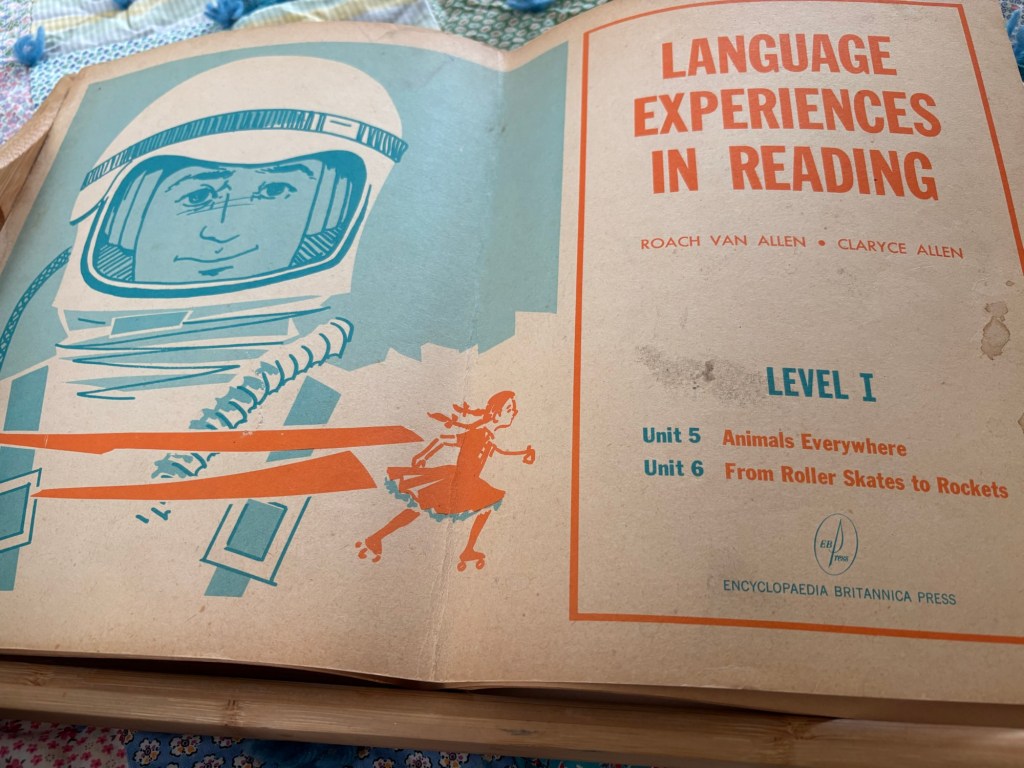
This terrific big work text for kids begins with a Read-Aloud Animals Everywhere Rhymes. Easy to recite, echo, memorize, dance to, sing or copy as a handwriting practice.
Hickory Dickory Dock
The mouse ran up the clock
The clock struck one
The mouse ran down
Hickory Dickory Dock
An Animal Story page allows plenty of room for a student to draw a picture of a favorite animal and then write a story. From there we go to Farm Animals, Zoo Animals, Animal Riddles, Animals In The Clouds, Animal Tracks and Crazy Creature Animals.
On The Top Of The Crumpetty Tree
The Quangle Wangle Sat
But his face you could not see
On account of his Beaver Hat
(Edward Lear Nonsense Poetry)
The literary concept of Riddles as Puzzles is introduced.
Who lives in a straw house in a tree and hides her babies from you and me? Who lives in a hollow tree in the wood that he fills with nuts for his winter food? Ethel M. Wegert
A series of Critical Thinking Skill Exercises Featuring The Use Of COMPARISON: I Can Run As Fast As… I Can Eat As Much As… I Can Play Like…
There is a page dedicated to good old-fashioned pasting Cut-Out Animal Pictures.
Animals In Clouds Activity offers a lovely Read/Recite Aloud poem entitled CLOUDS.
White sheep, white sheep on a blue hill
When the wind stops you stand still
When the wind blows you walk away slow
White sheep, white sheep where do you go?
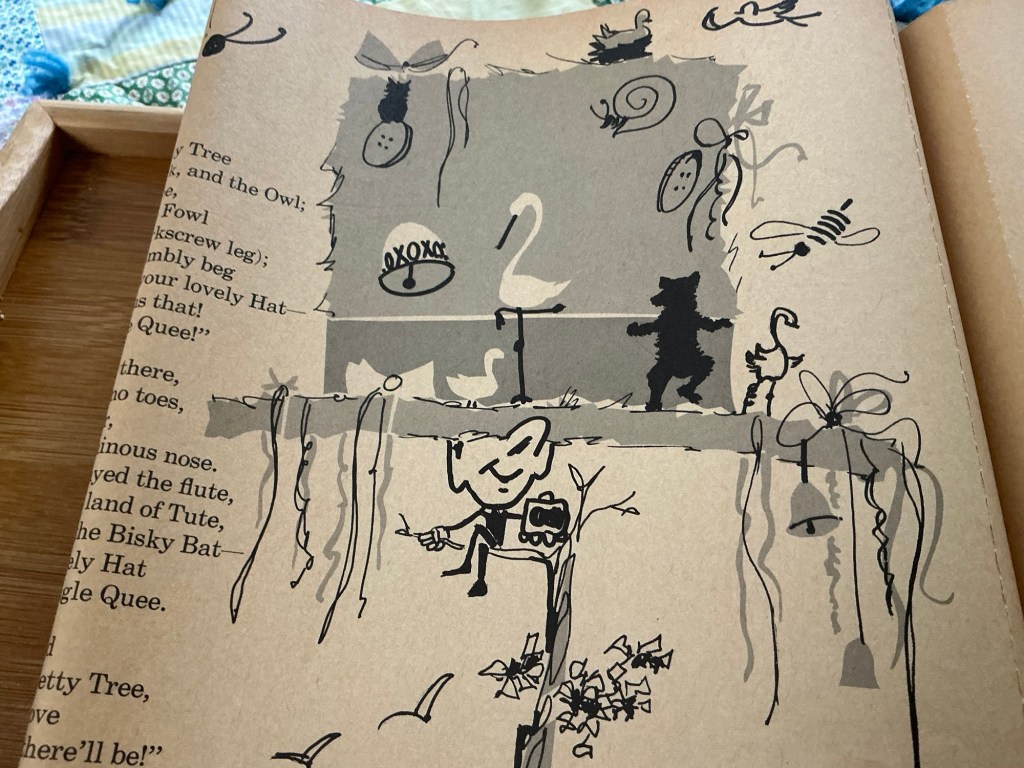
These work texts are meant for work. They spread out nicely on a flat surface. They are made of sturdy paper strong enough to withstand the pressure of primary pencils, glue pots, thick crayons or watercolor painting. Each page is perforated and can be torn out for display at school or at home.
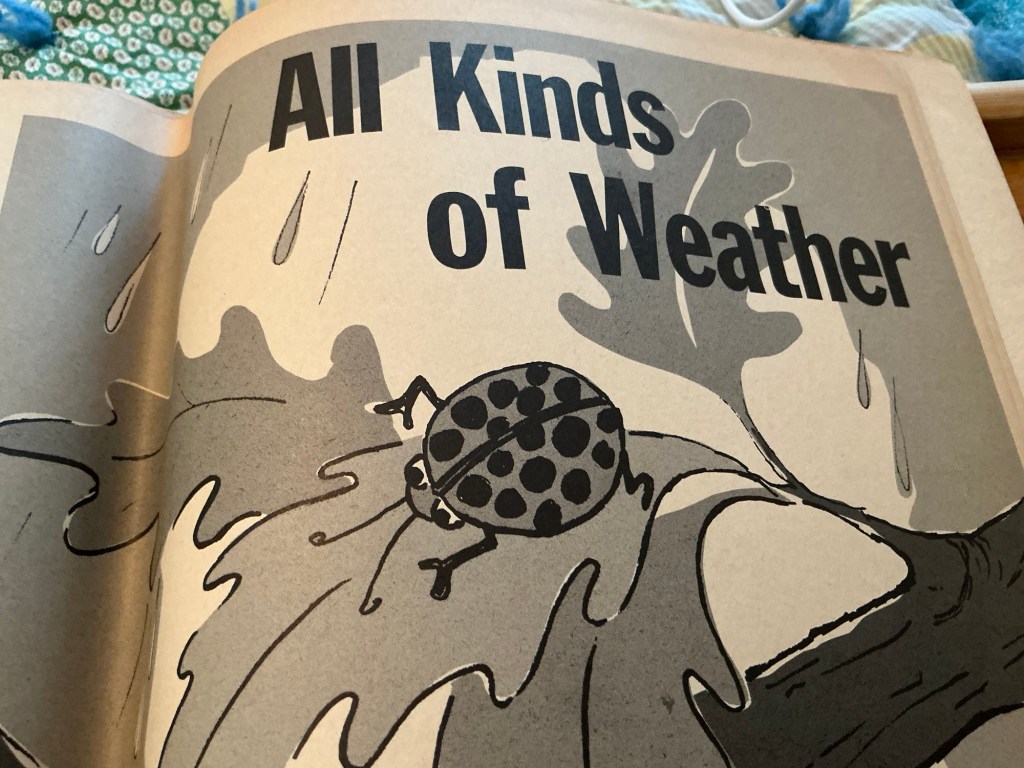
Book II blends Literacy + Science + Child as Weather Observer. A 9 year old boy named William contributes a poem he authored.
THE WIND
The Wind! Wishing, Swishing, Howling, Pushing.
That’s the wind. The wind is cold. The wind is chilly. Wind! Screeching, wheezing, Breathing, freezing. That’s the wind! Dash!
Tumbleweeds roll, trash cans crash, SMASH!
The dirt flies high, dust gets in your eye. That’s the wind!
How about a page for recording Figures Of Speech Similes?
It is cold as ice. As hot as an oven. As scorching as the desert. As sweltering as a sauna. As fresh as a daisy. As silent as a snowflake.

Arthurdale Community School

Chicago Handwork Classrooms
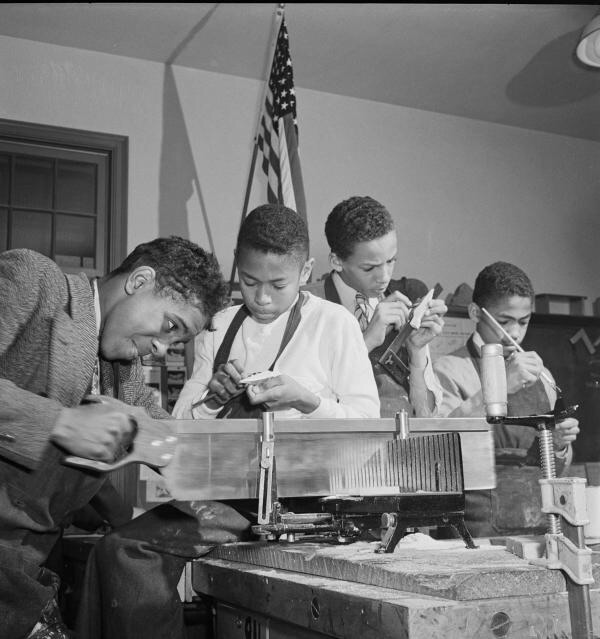
The School In Rose Valley

Cambridge Nursery School

Water Work
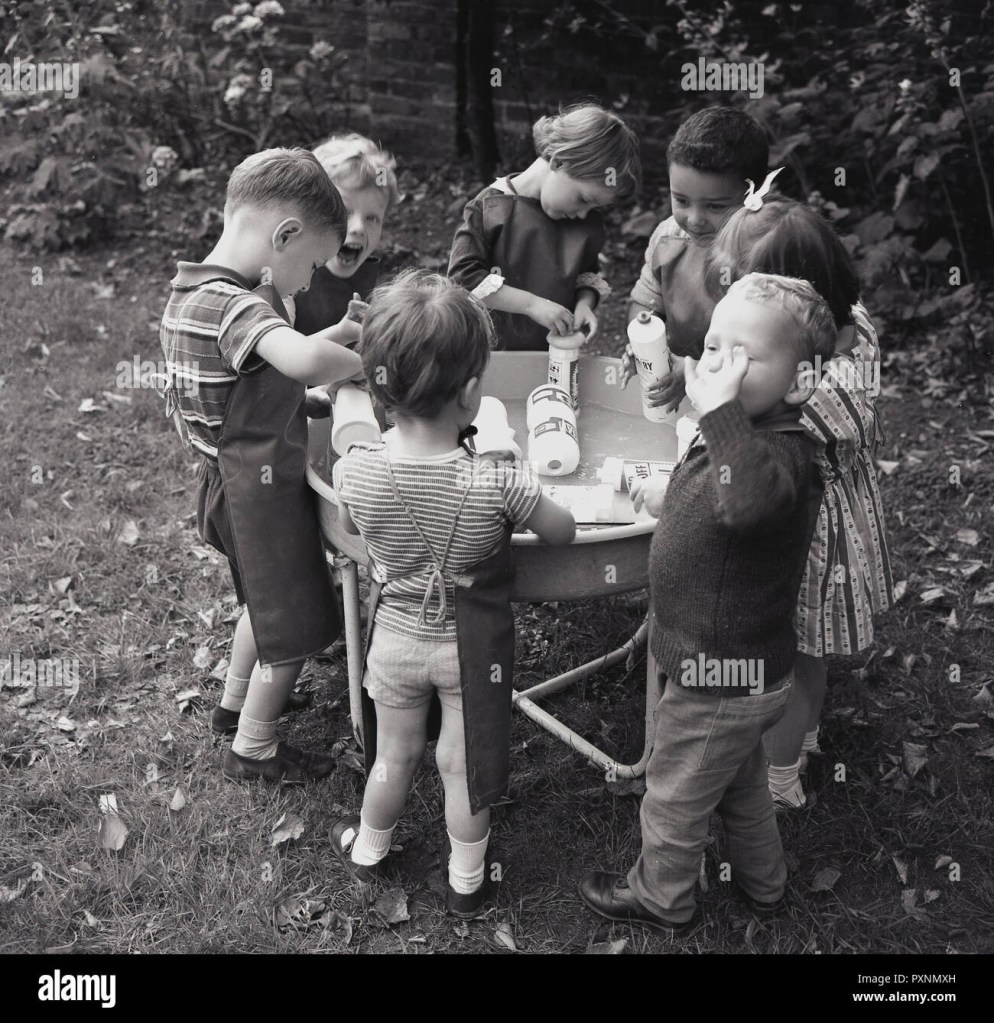
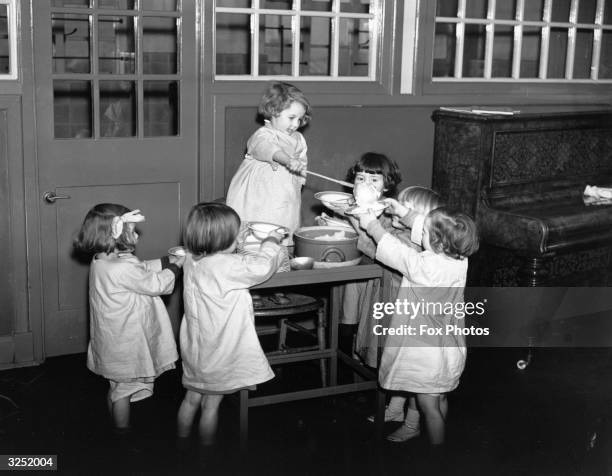
More Please!
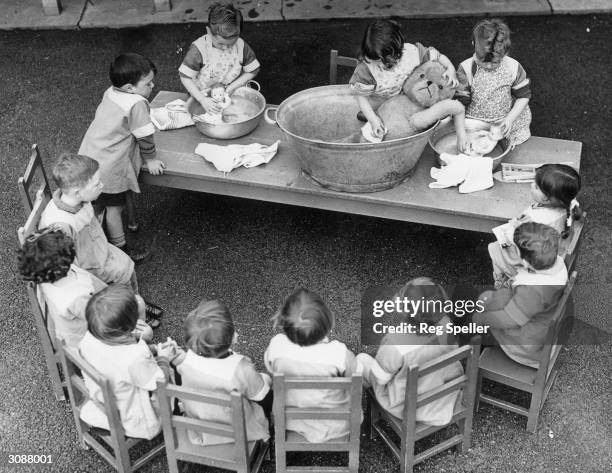
Bathe The Baby
Big Motor Work

Mable Hillery was a singer of Georgia Sea Islands children games, dances, plays, fantasy songs, blues & spirituals. She was known by school teachers for developing teaching manuals and audio tapes that preserved traditional folk songs from The Georgia Sea Islands.
Mable worked with Interdependent Learning Model’s Follow Through Program housed at 144 West 144th Street. It was a part of the Graduate School and University Center of the City University of New York. This program developed materials for classroom teachers seeking to preserve & highlight Black culture.
Ms Hillery worked on cultural projects in Harlem. Specifically at Public School 76 located at 220 West 121st Street. She also worked with six schools in Atlanta. And eventually instructed at Bank Street School Seminars. She was especially devoted to recitals of “play songs” for Black children.

Her workshops often combined children, youth and adults. They were definitely not sit down affairs or staged events. Participants could choose just to observe, but everybody was involved one way or another.
From Mabel we learned never to judge a book by its cover. Someone might be sitting on the sidelines out of shyness. But if you studied their face, you saw the interest, the concentration and the absorption.
A favorite play song routine was titled Little Johnny Brown. It was lots of fun and very humiliating for all of us who joined in. It went like this.
“Little Johnny Brown. You spread your comfort down. Little Johnny Brown spread your comfort down. Fold one corner Johnny Brown. Now fold another corner Johnny Brown. Fold another corner Johnny Brown. Yes fold another corner Johnny Brown. Now take it to your lover Johnny Brown. Take it to your lover Johnny Brown. Show her your emotions Johnny Brown. Show her your emotions Johnny Brown. Now lope like a buzzard Johnny Brown. Lope like a buzzard Johnny Brown. Give it to your lover Johnny Brown. Give it to your lover Johnny Brown.”
The humiliating parts were the required actions. The dance began with a big circle. One person was chosen to play the leader role of Johnny Brown. That person was given a piece of fabric to symbolize a comforter or a quilt. And when the big group sang “Little Johnny Brown spread your comfort down.” The leader placed the quilt on the floor in the middle of the circle and began artfully or humorously dancing to each corner folding them one by one. Taking it to Your Lover involved some completely silly, improvised movement. And Lope Like A Buzzard had you flapping your wings and imitating any type of chicken dance you could manage.
Absolutely hilarious and a terrific group builder as well. Everyone laughed. Everyone enjoyed the antics of the Leader. Inhibitions began to melt away. And often as not, friendships were formed. This was the genius of Mable Hillery. She was a Community Organizer Georgia Sea Islands Style.
Mable Hillery never-ever forced participation on anyone. Water was allowed to seek its own level, so to speak. Reticence was respected and protected. She told us quite explicitly not to try and remember the words to the songs “perfectly.” We were humans. We were artists. We were teachers and students all rolled into one. And we kept the traditions ALIVE by adding our own pizzazz to the mix. We also used our own voices. No recorded music. No instruments. No technology of any kind. These were street games, stomps, songs, hand-claps and chants. We performed them and enacted them as if we were on a neighborhood corner, a playground, an open field or a coastal Sea Barrier Island Sandy Beach.

Another favorite was “Chicken And A Chicken And A Crowd Of Crows.” This one was a hand-clap which could get as complicated as your eye-hand coordination permitted. Or could remain as basic as a simple patty cake clap.
But the words told the story of a witchy woman who liked to steal chickens. It goes like this. “Chicken and a chicken and a crowd of crows. I went to the well to wash my toes. But when I got back, my chicken was gone. What time was it Old Witch? It was a 1 o’clock. Say 1 o’clock.” Everything gets repeated taking us from 1 o’clock straight up to 5 o’clock. And each time a number is shouted we paused, threw one hand up into the air and waved it, along with our hips, turning about as if we were the stars of a full-on Hokey-Pokey production.
This song held the flavor of a mysterious island childhood. Where a community well became the focal point for all manner of public rituals. Washing dusty feet or cleaning a freshly butchered chicken only to lose it to a thieving, creepy crone. Exciting stuff!
Just so we are CLEAR! This is The Georgia Sea Islands Brunswick Georgia History that Mable Hillery married into.
“On February 21, 1891, almost exactly 129 years before white vigilantes fatally shot Ahmaud Arbery in Brunswick, Georgia. A mob of white men lynched two Black Men named Wesley Lewis and Henry Jackson. Just outside of Brunswick. Without trial or investigation they were hanged from a tree, riddled with more than 1,000 bullets & then left on display for thousands of white spectators to view. As one newspaper described the scene:
…the population of Brunswick turned out en masse to visit the scene of the lynching. Vehicles were at a premium and it is estimated that more than 3,000 people made the trip to Dent Swamp during the morning. A few hundred yards away from the improvised gallows a country church was in full blast, and the singing of hymns almost within sight of the dead negroes.”
Mable’s work was always a powerful tribute to these very people and the trauma they had endured for generations. Buried in the belly of the Plantation System brutality emerged a deep, intelligent, delightful, creative & subversive repertoire of music, myth and mischief. This was the treasure teachers were given.
The universality of these songs and games is both stunning and reassuring. 30+ years of sharing them with people of all ages and incomes confirms their enduring appeal. They sound REAL. They feel like stories that happened to someone & somewhere familiar. They are so authentic that they stick in your throat and in your muscle memory. Therefore, they are easy to remember and reproduce vocally and motorically.
Folklorist & Ethnomusicologist Alan Lomax thought so highly of Mable’s work that he wrote this to The Ford Foundation.
April 7, 1969. “Mable Hillery, and the Reverend Frederick Douglass Kirkpatrick have had great success in improving the atmosphere and the educational exchange in Harlem School PS 76, at 220 W. 121st Street. They did it by bringing to the kids the complex and culturally rich folk songs and dances of the Southern United States. A pilot experiment is ready to be set up involving Mable Hillery and Reverend Kirkpatrick and the Sea Island Singers in the New York City school system.

Last year these two Black friends of mine, Mable Hillery & Reverend F.D. Kirkpatrick, who are ‘natural educators’ and also great singers of folk songs, worked in one of the most disturbed schools in the NYC metropolitan area.
They brought peace and a renewal of educational activity into situations which had formerly been totally chaotic. Where school administrators and teachers were out of contact with their pupils. This art is itself a communication about the Black cultural tradition which has been mistakenly omitted from our educational curricula. The most talented Black folk should be brought into the schools to give the children a formal education in the Afro-American musical tradition. Teaching the children the songs and dances of their ancestors. Is how the lessons of history, social science and literature can be given a richer meaning. By bringing in people from the community, the schools will be establishing natural ties to the entire Black community.”
And Here Is What Can Be Found Today At The Library Of Congress.
The Carpenters!
This story is about a Father-Daughter Team who traveled the world and wrote Geography books. You remember Geography? The subject we no longer teach our Global Citizen children.
The father’s name was Frank Carpenter and he was born 1855 in Mansfield, Ohio. Frank was a photographer, a journalist and a globetrotter.
His daughter Frances was born 1890 and she accompanied her father as his secretary + backup photographer.
They wrote elementary school geography books with titles like: How The World Is Clothed 1907
Around The World With The Children 1917
The Foods We Eat/Journey Club Travels 1925
The Houses We Live In/Journey Club Travels 1926
The Clothes We Wear/Journey Club Travels 1926
The Ways We Travel/Journey Club Travels 1929
So what was the Journey Club Travels? It was children forming what amounted to a virtual travel club. They wished they could visit people in far-away lands but since they couldn’t, they would venture forth using imagination, research, artifacts, data, photos and much more. They even chose a Motto which was “Let Us Find Out.”
The Journey Club begins to sound like a real club. In the Houses Book someone named Jack is selected as President and he convenes the group by announcing, “The Journey Club will please come to order!” And so they do.
Mary reads from a record book and reports on the trips they have made. Dick tells the kids about a Journey Club Museum that is being organized. They find a space and set up shelves for all the artifacts and info they’ve gathered. Finally, they make what amounts to an exhibit from the Food Trips they had just completed.
A Planning Committee appears with a presentation on trips in the offing. How about great forests, mines, mills, foundries and factories? The Houses Journey gives them the idea to build an actual playhouse calling on guidance from someone’s father who operates a house-building business.
As you can see, it just goes on and on and on!
The Carpenter approach to Geography was not War-Based, Trauma-Based, Famine-Based, Climate Crisis-Based, Immigrant Search & Seizure-Based. It was none of that. Even though all of that was going on everywhere as the Carpenters traveled and published.


“By the 1890s, Frank Carpenter’s convivial Newspaper Column introductions to international understanding quite naturally became directed toward school kids—whose traditional geography textbooks were more effective than sleeping pills. In Carpenter these youth found a companionable voice who spoke in terms of comparisons they understood like breakfast and clothes and pets. His fascination with the variety of humanity was a contagious and welcome force in shaping education and values.
A couple generations of American kids came to adulthood with Carpenter’s friendly regard for the rest of the curious wide world. Friendly is as Friendly does.
By the time Carp died in 1924 at the age of 69, he had written 20 books of travels for children and adults, published a newspaper column every Sunday for 31 years and dozens of travel pieces in Cosmopolitan magazine. And shipped, trained, automobiled and donkeycarted over very nearly the whole of the planet.
He also documented his voyages with a camera. His daughter Frances had the collection of 15,000 photographs placed in the Library of Congress. In recent months the digitized collection has been made available online. So today you can follow Frank Carpenter around the world from the comfort of home on your online screen.
It’s exactly what Frank had in mind. Looking at the photos you can’t help but love the guy. As did millions of Americans a hundred years ago.”
https://richlandcountyhistory.com/2019/08/05/carp-frank-carpenter-and-the-world/
Most of what we’re learning about the world right now comes in the form of bad news.
We discover the beautiful beaches of Gaza overlooking the Mediterranean Sea. But our introduction includes watching Gaza being bombed into oblivion.
That is not the most instructive way to be learning geography.
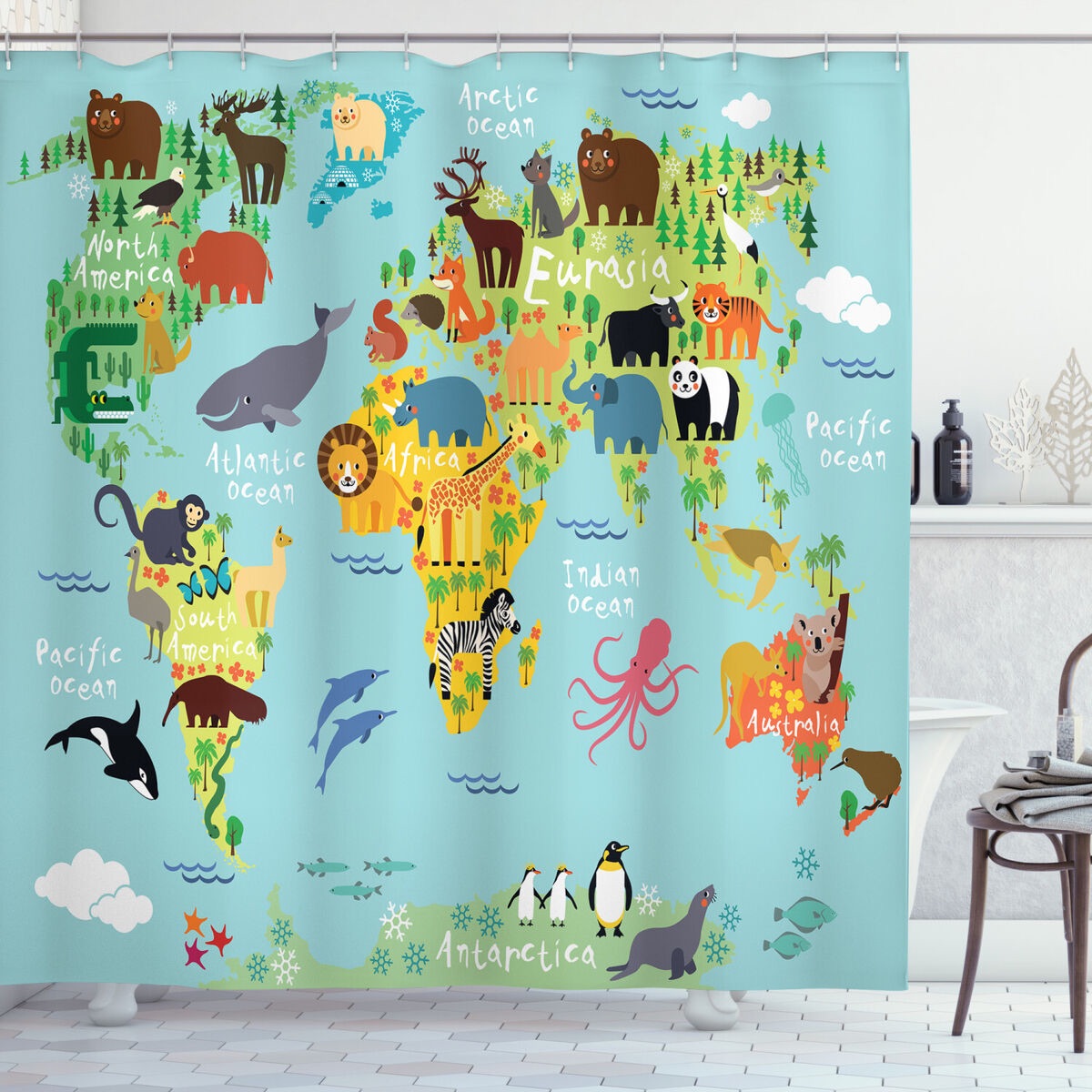
I love this shower curtain. It is colorful, clearly illustrated and full of opportunities to become interested in the abundant terrain & inhabitants of our world. Obviously it could hang in a bathroom. But also in the bedroom, a studio, a classroom, a living room or on an outdoor patio.
There is so much detail here that pulls one in for reflection and research.
Whether it is used in a home or in a school, it is a starting point for adventure, inquiry and imagining.
Rather than thinking of geography as a subject that one must study using globes, pull-down maps or textbooks crammed with factoids and photos. How about a shower curtain? Begin by listening and not lecturing.
Are you curious about the animals? What do the colors signal for you? Blue, Green, White, Yellow? How many land masses are shown and how many BIG bodies of water are left off of this playful, eye-catching chart?
“They sensed very quickly the attempt to subjugate and beat them down to low wages and a precarious living.
Their resentment is peculiarly without bitterness. Their desire to get a just return for their work is strong.
A system of migrant self-government began to take form. They called it Functional Democracy. Committees took on Sanitation, Child Welfare, Adult Recreation or Fire Safety. This problem-solving energy was an important factor in keeping and restoring human dignity. It was so successful that when camp people moved to new locations, they set up DFS’s wherever they went.”

Sonora Babb Dustbowl Migrant Camp Activist
On the Dirty Plate Trail: Remembering the Dust Bowl Refugee Camps. U of Texas Harry Ransom Humanities Research Center Imprint 2007.

Yes! Kraft Heinz is pulling Lunchables. From the low-income school meal program. Consumer Reports says “Lunchables & other lunch kits = high levels of sodium + cadmium + other harmful chemicals & have no place on the school lunch menu!”
But please Do NOT applaud these corporate menu monsters. Because the kits they sold to the craven cafeteria crowd were created SPECIFICALLY for school lunch programs. And worse, contained even HIGHER levels of toxins than those available in the grocery store!
Do you want to think about absurd elites? Then let us begin by imagining John Kerry telling his wife Teresa Heinz to get her privileged posterior into a Kraft Heinz Board Meeting and immediately removing the publicly-funded poison from the bellies of the impoverished. But No. John was too busy flying around the globe as U.S. Special Biden Envoy For Climate. Hypocritically Lecturing anyone who would listen to him. Droning on about global warming dangers. While his wife’s company was killing off children in the ghetto, the holler, the REZ & the barrio. Well at least they won’t have to suffer the ravages of climate crisis.
For sure The Kerry-Heinz-Biden offspring are not excelling at their private schools on a steady diet of Lunchables. Instead they stay way ahead of the curve thanks to a wide assortment of resources and opportunities available to very few. But this is necessary so that they can grow up and one day continue to rule & reign supreme over YOU. That is how the pecking order works at present.
If you do not care for the duplicitous manner in which this last election was executed from BOTH sides of the aisle. Then please join the outrage in some meaningful fashion. Because these fiscal fiends aren’t giving up. Kraft Heinz Final Word? “Lunchables products are not available in schools this year but we hope to revisit that at a future date.”
Lastly a reminder from The Science Corner. Cadmium is linked to kidney and bone disease and cancer. There is no safe level of lead for children.

 kathyirwin1