FB58EA88-DE94-4294-B80E-DB1F752A24E4

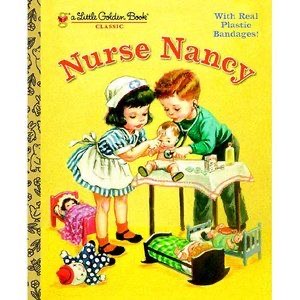
Play Doctor and learn how to:

Listen to a ❤️ heart beat, Take a temperature, Measure out pretend liquid meds using a calibrated dropper, Feel for a pulse, Create and use a handmade eye chart, Tap knees for reflexes, Create a patient chart with dates, times, symptoms and cure, Write a prescription, Make a Patient scheduling book, Fill empty containers with food coloring meds and use art supplies to make bottle labels, Learn the names and spellings for common medications like aspirin or eucalyptus. Fill your hours with imaginative medical investigations. Oh, and be sure to draw a detailed x-ray of a human body. Lots of bones to consider.


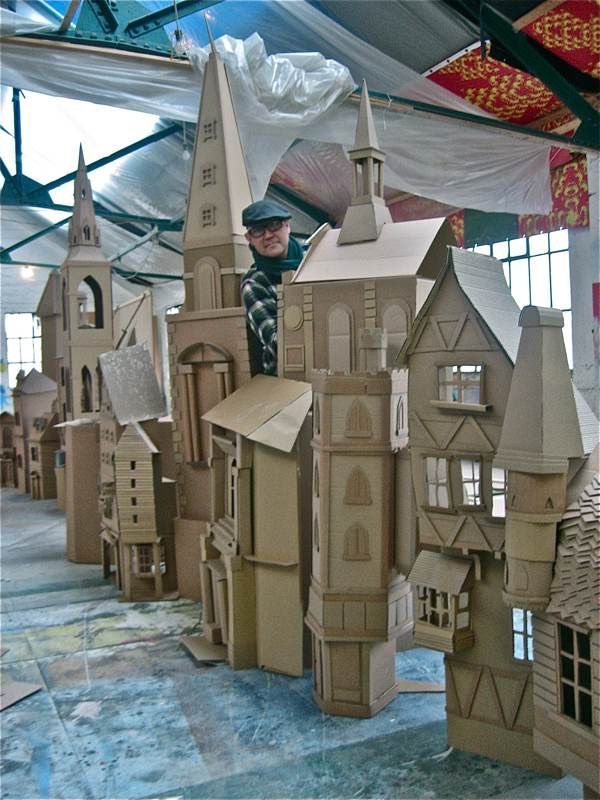
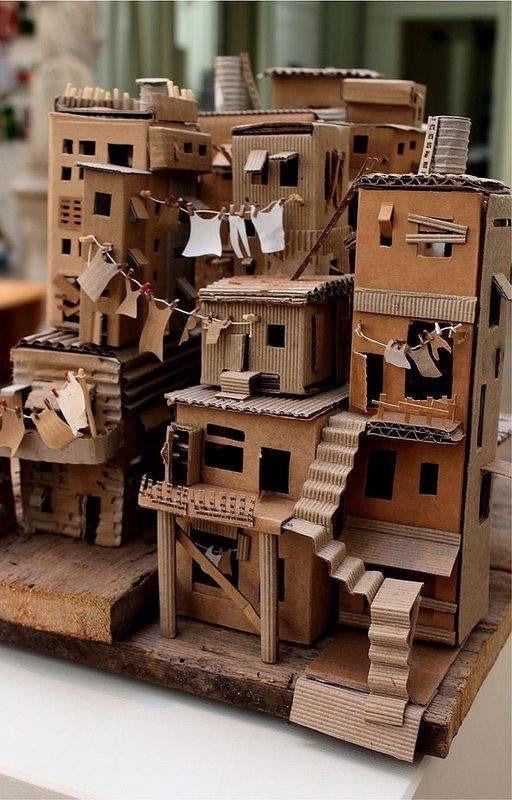
Cardboard Carpentry is easy because cardboard is readily available. The images here are works of art using sturdy cardboard. But any cardboard will do. Cereal boxes, index cards, recycled greeting cards, cracker boxes or packing boxes are all suitable. Tape and glue are necessary. And very young children usually benefit from having someone to partner with.

Pictures can help. Images of huts, cabins, apartments, castles, duplexes, houses, stores, businesses and complexes give children an idea of how structures are assembled, connected, designed, decorated and interrelated.

Collections of miniature people, animals, transports, furniture, plants, grasses, toys, tools, kitchenware or art provide detail for the imagination.

Hands On Floating Curriculum

In October of 2018 a group of NYC kids began the process of building a boat dubbed the Opti. Under the direction of Laura Botel, the program coordinator of Brooklyn Boatworks, a nonprofit after-school program and its volunteers met with students for two hours each week. Together they mastered new manual skills and a new vocabulary, including words like transom, daggerboard and thwart.
Schools in Crown Heights, East New York, Harlem, Washington Heights and Woodside, also built Optis that year.
In the fall at Middle School 88, the boat building process began with four unfinished sheets of marine plywood, design plans and some basic hand tools like screwdrivers, small saws and cordless drills. The idea was to build a seaworthy boat entirely by hand and then sail it in an inlet on the East River on an appointed day by the end of the school year.
The day came on June 10th. Yes it rained, but it happened. A small flotilla of Optis, each one of which had been built inside classrooms across the city, set sail, holding one student-builder and one adult. Note that it is standard procedure for Optis to be equipped with buoyancy bags.

Screen Shot 2019-03-13 at 10.16.40 AM.pngScreen Shot 2019-03-13 at 10.21.01 AM.png

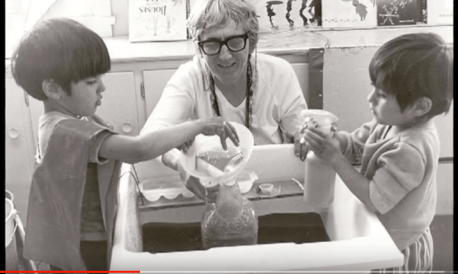
To the Water Table Frances Took: Clean detergent squeeze bottles, old plastic medicine jars, perforated berry baskets, funnels, flexible, plastic tubing of varying length and diameter, plastic medicine droppers, poultry basters, bulb ear syringe/aspirators, corks, plastic measuring cups, plastic water jugs pint, quart, gallon, mini bike pump, battery-operated fan, clear plastic eye dropper, salt shaker, wide variety of sponges.


There is a portraiture involving the child’s style – strengths, weaknesses, skills fears, and the like.  I single out one aspect of this complex, the way a child comes to grips with some subject matter, matter originally provided because it matches the general level of interest and ability of a still individually unknown group – building blocks, clay, paint, batteries and bulbs.  If this subject matter represents something which the teacher has valued and learned from, and seen others learn from, then the teacher has a background for reading the behavior of that child.

In a film from Cornell University, a series of kindergarteners come spontaneously to a table to play with an equal-arm balance and a large number of washers and other weights.  In watching the film, the observer begins to recognize in himself – if he is personally familiar with the large variety of balance situations which are possible here, and with some of the underlying ideas – the ability to read the levels and the specializations of interest represented in these children, no two alike.

What he finds himself doing (but only if he is acquainted with this kind of balance phenomenon and others related to it) is beginning to build what I would call a map of each child’s mind and of the trajectory of his life.  It is fragmentary, fallible, but it is subject always to correction. and next the observer thinks to himself, what could I do to steady, extend and deepen this engagement I have glimpsed?

The important thing is that, as in all self-instruction, the participant DOES something.

What It Means To Teach
David Hawkins
OUTLOOK
Mountain View Center For Environmental Education
12: Summer: 1974

Joseph Featherstone’s Schools Where Children Learn highlights the work of Elwyn Richardson in northern New Zealand.  Featherstone suggests that In The Early World may be the best book about teaching ever written.  Certainly it’s one of the most beautifully designed. Reproductions of children’s art of an astonishing quality fill its pages – wood and linoleum cuts, pottery, and fabrics, as well as writing.

Featherstone reflects that it takes time for the reader to understand that a long account of how the class took up pottery is meant to be emblematic of a whole style of teaching. Clay of various grades lay in deposits near the school, and Richardson and the children tested samples to see which kinds were good to work with.  They built a small brick kiln and pottery became the standard activity in the school.

Messing around, the children slowly learned the limits of the material – you couldn’t build wet clay too high or it would collapse.

Pottery grew into writing deeply influenced by the natural world surrounding the school.

The pine tree stands
With cracked sooted arms
With stumped branches
Rotted into the ground

Richardson’s testimony on the work:  I saw that I had to teach as much as I could when opportunities arose, and that this was a better kind of teaching than I had known when I was following through topic after topic.  If I did not teach at such times, the work became poor and lifeless….The series of developments taught me too, that I must use environment to the full and encourage individual expression rather than class.  This meant more individual and small group observation.

Elwyn S. Richardson, In The Early World, Pantheon Books @ 1964.Screen Shot 2018-06-13 at 10.29.31 AM.png


Yes.  These are all school chairs.  Or they should be.

Have a look.

No institutional, plastic, mass-produced, poorly-welded rubbish.

Screen Shot 2016-09-22 at 3.06.01 PM.png

From Italy

Screen Shot 2016-09-22 at 3.31.00 PM.png

Sock Monkey

Screen Shot 2016-09-22 at 3.32.12 PM.png

Bunny Chair

JapaneseChairs.png

Japanese Company Hiromatsu Children’s Furniture

Screen Shot 2016-09-22 at 3.55.12 PM.png

Fiber Art Chair

screen-shot-2016-09-23-at-10-14-15-am

Yoruba People Beaded Chair Africa

The simple act of acquiring non-traditional school chairs can serve as a first step in de-institutionalized thinking about schools.

As long as it is acceptable for chairs to be insignificant, garish and poorly constructed, then everyone’s imagination and appreciation is diminished.

One way out of our current catastrophe is to consider beautifully, lovingly constructed chairs.
The adults change and the children change and it is all for the better inside an enhanced Circle of Children.

But for too many adults working in today’s USA classrooms, be they public or charter, these chairs would get you fired.  Good luck finding an employee who attached significance to a chair, its artistry, composition or appeal to children.

But if you did locate such a humane individual, you would probably find them subject to the equivalent of a modern day witch hunt.
Imagination and Initiative are lethal. Anything that lives outside the realm of metrics and data massaging must be extinguished.
The cult of bean counters know how to look after their own and chair enthusiasts don’t belong.

It begins and ends with what Giroux calls “normalized ignorance”. The fog of crude, callow and empty gobbles up all available space. Chairs are ugly on purpose.  No one cares about them and that’s exactly the point.  In such schools, uncouth regimes remain as authoritarian sciolists.  There is money to be made and beautiful chairs obstruct the cash flow.

A Bunny Chair will get you booted.  You can bet on it.

And then there is the problem of going off message.  Curriculum becomes a series of commercials on how to care for and preserve artful chairs.

Next, the Yoruba people arrive bringing with them a vibrant history of beading, braiding, tattooing, clay and ceramic molding, bronze casting, weaving, dyeing and sculpting.

When would there be time for War Room confabs, choking on bulging, black binders bursting with benchmark analytics?

We did this in Chicago and discovered great, small business people operating hair salons, hardware stores, rib joints and corner groceries. They ALL contributed to our neighborhood curriculum and it was an eye opener how resourced this impoverished community really was. Lots of smart people with an eye on education.

LucySpragueMitchell

It was a small cooperative store on a little known island off the coast of South Carolina. During the harshest days of the civil rights struggle, embattled black leaders came through its doors seeking inspiration. Among the legendary leaders who visited the co-op were: Ralph Abernathy, Dorothy Cotton, Conrad Brown, Fannie Lou Hamer, Martin Luther King Jr, John Lewis, Bernice Reagon, Cleveland Sellers, Kwame Ture (Stokely Carmichael), Andrew Young, Hosea Williams and many others.

What began in that co-op was a Citizenship School to teach blacks on Johns Island, South Carolina how to qualify to vote. Later, the Southern Christian Leadership Conference (SCLC) spread that program throughout the South. That one class in the co-op became thousands of classes in churches, schools and homes. In 1962, the SCLC brought in other groups who then formed the Voter Education Project (VEP). Between 1962 and 1966 VEP trained 10,000 teachers for Citizenship Schools and 700,000 black voters registered throughout the South.  By 1970, another million black voters had

Aldon Morris in his book, “Origins of the Civil Rights Movement,” wrote: “…the Citizenship Schools were one of the most effective tools of the movement.” That class at the co-op led to millions of blacks voting for the first time and as a result the South and US history were changed.

The co-op was called the Progressive Club. Johns Island is one of the Sea Islands, home to the unique Gullah people who had retained a lot of their African cultural heritage. In the 1940’s Johns Island was remote and a nine-hour ferry ride to Charleston, SC. After WWII, bridges slowly began to connect Johns Island to the mainland.

The Progressive Club was started in 1948 by Esau Jenkins and other Johns Island residents as both a consumer co-op and a mutual aid organization. About forty families started the co-op. The co-op bought an old school building on River Road that sold everything from groceries to gasoline and seed to feed. The members used it to trade goods and services and as a mutual aid program to help each other in time of need.  Every member of the Progressive Club had to be a registered voter and had to pledge to get one or more voters out to vote on Election Day. A little later, Esau and others organized the CO Federal Credit Union (still operating) to serve low income blacks who could not get mortgages or

In his business life, Esau Jenkins ran a bus service which served the needs of high school students and daily workers going from the island to downtown Charleston. One day, in the 1950’s one of the passengers, Alice Wine, said to Esau Jenkins, “I’d like to hold up my head like other people, I’d like to be able to vote. Esau, if you’ll help me a little when you have the time, I’d be glad to learn the laws and get qualified to vote. If I do, I promise you I’ll register and I’ll vote.”

Esau Jenkins heard her plea. He copied off the laws and handed them out to his passengers.  He began a daily custom of teaching them how to read and write and learn the law while he drove the bus. Blacks could not get the vote in South Carolina unless they could pass the literacy test. Alice Wine was the first of his passengers to register to vote. What Esau Jenkins was teaching on the bus to a few passengers he wanted to make available to all the disenfranchised blacks on the Sea Islands. But how?

Another avenue for Esau’s road to democracy was about to be opened by Septima Clark.

In 1953, Septima Clark, an activist Charleston teacher learned about the Highlander Folk School in Tennessee as one of the few places in the South where blacks and whites could meet together. The Highlander Center was modeled after the Danish Folk Schools which themselves spurred the Danish cooperative

Septima had taught on Johns Island and Esau had been one of her students. In 1954, Septima went twice to the Highlander Center. There she met the founder Myles Horton and his wife Zilphia who that summer came down to South Carolina, to Johns Island to learn about what was going on.

In 1955 & 56, Septima taught a leadership class at Highlander. She used her car to transport three groups of people there from the Charleston area, including Esau Jenkins. During his time at Highlander, Esau Jenkins saw that a combination of the Highlander teaching technique and his rolling bus classroom was the next step. Esau saw also that Septima Clark was an exceptional teacher of the Highlander method. Propitiously, Bernice Robinson, a cousin of Septima, was another of the Charleston attendees. Jenkins asked Highlander to help merge the two formats and sponsor a Citizenship School on Johns Island.

The first form of the Citizenship School began at the Progressive Club in 1957. But with the co-op having grown to 400 members, the old school building could not also accommodate the growing needs of the Citizenship School.  They tried to rent, however, none of the schools, churches or organizations on Johns Island dared to let the “Citizenship School” use their buildings. They were afraid of what might happen to them.

Esau and the members of the Progressive Club saw that the only option was to do it themselves by buying land and building a new co-op store with meetings rooms. Esau called Myles Horton at Highlander to talk about where the Progressive Club would get the funds.

Highlander lent the funds to the Progressive Club to buy land on Johns Island to build a new larger co-op store.  The new store was built nearby on River Road and opened in 1963. (The building still exists and is now on the National Register of Historic Places).  At the front of the co-op’s building was the retail shop with a store room behind it that acted at night as a meeting room. Behind that they built a dormitory to house participants from afar and also an indoor basketball court. There amongst the weighing scales and storage counters democracy for many blacks in the South was born. Alice Wine became one of the cashiers at the co-op and she can be seen in a lot of the historic photos.

Septima Clark is one of the most unsung heroes of the civil rights movement. (In 1955, Septima invited Rosa Parks to her class at Highlander. Just months before she refused to give up her seat on that bus in Montgomery, Alabama). In 1955, the State of South Carolina passed a law stating that teachers who were members of the NAACP would not be allowed to keep their jobs. Septima Clark would not leave the NAACP and in 1956 she lost her teaching job in Charleston. Myles Horton learned that Septima had been fired and asked her to become Director of Workshops at Highlander as well as the Highlander’s liaison with Esau and the Citizenship School.

In “Ready from Within,” Septima Clark comments about the co-op store, “…Esau’s group fixed the front part like a grocery store and sold things to themselves …There were two rooms in the back and in those two rooms we taught. We didn’t want white people to know we had a school back there. We didn’t have any

Brought in to be the regular teacher at the Progressive Club was Bernice Robinson, the young cousin of Septima Clark who had also attended Highlander. Highlander raised funds to pay for the program and had Septima Clark oversee it. Soon the Marshall Field Foundation in Chicago took an interest in growing the program beyond Johns Island.

However, at this time the State of Tennessee decided to use illegal tactics to close down Highlander. As a result, Highlander was closed and all its properties and assets sold by the local sheriff at auction. To protect the Field grant and the Citizenship School program, the Highlander quickly transferred the funds and the program to the Southern Christian Leadership Conference (SCLC). Septima Clark, Bernice Robinson and others were transferred with it. Andrew Young and Dorothy Cotton were asked by the SCLC to grow the program beyond Johns Island to the rest of the South.

Young and Cotton, and many other civil rights leaders, were still taken to the Progressive Club to see how the program best worked. On her way back with other Mississippi voting rights activists from their visit to the Citizenship School Fannie Lou Hamer was infamously beaten up in Winona, Mississippi.

There are many other stories about the impact of the Progressive Club. For example, one of the stories would be about the Sea Island Folk Festival that took place in the field behind the Progressive Club. Intertwined with all of this is the work of Guy and Candy Carawan of the Highlander Center who lived on Johns Island in 1963. Carawan spread an old song from South Carolina through the Highlander Center to Pete Seeger and the rest of the world. That song, “We Shall Overcome” is now a freedom anthem worldwide, and the song rights are owned by the Highlander Center.

“We Shall Overcome” reminds us of the accomplishments of that simple Citizenship School humbly created in a co-op shop that became one of the greatest stories of the Civil Rights Movement.

David J. Thompson is writing a book about, ”The Role of Cooperatives in the Civil Rights Movement.” He visited the Progressive Club store about 1996 when it was covered in vines and almost forgotten.

Dear Mother, Dear Father, Dear Teacher, Dear Friend
Public School as we knew it, has come to an end

Across the U.S. we dissect and discuss
How Smarter & Balanced is a spectacular BUST

All true, can’t deny it, I loathe it, I hate
Fabricating fragile inferences on coyotes and the wild honey they ate

But a Yote is a carnivore, and not one to mimic
A bear in a beehive, it really is ALL one big gimmick

Teams of technocrats sitting far from the fray
Of imaginative 4th graders on Pearson Testing Day

Don’t care that the passage is a “diversity” bore
A deliberate distortion of Native/Hispanic lore

A topic we don’t study, but maybe we should
Is how corporate conglomerates came to conquer our Hood

Every subject manipulated to maximize shame
While misguided systems chase after profit and blame

So here we all sit, not to be fooled
Stewing in outrage, not about to be cooled

We’re smart! We know it! This test is no measure!
Of US, Your Children, Your National Treasure

By Kathy Irwin